


A study implicates nylon or PET (petroleum-based plastic) tea bags, which are responsible for releasing billions of microplastic particles during brewing.
How can these microplastic particles impact our health? Are there alternatives to tea bags containing plastic ?
Summary
The study
On September 25, 2019, a Canadian study was published with the aim of raising awareness among tea and herbal tea consumers.
During the infusion of a nylon or PET bag, ACS Environmental Science & Technology reveals that billions of microparticles and nanoparticles are released.
Indeed, researchers analyzed four tea bags from different brands. Simply steeping a single plastic tea bag at brewing temperature (95°C) releases approximately 11.6 billion microplastics and 3.1 billion nanoplastics into a single cup of tea. All of this is, of course, invisible to the naked eye.
Furthermore, the higher the temperature, the more plastic the bag releases.
Infused with room temperature water, it releases 300 times fewer plastic particles.

Release of microplastics and nanoplastics in water at 95°C
Yes, it is quite shocking to know that we absorb billions of plastic particles without seeing or knowing it, while it is the “norm” among bag producers.
At present, it is not yet possible to know the impact and consequences of plastic particles on the human body. The WHO (World Health Organization) has called for in-depth studies to be carried out.
While awaiting the results, the authors of the Canadian study recommend avoiding the consumption of plastic tea bags (nylon or PET) to avoid any health risks.
What are the alternatives to plastic bags?
As we saw earlier, some types of sachets release toxic particles.
We have created a description of each type of sachet to make your choice easier when you next buy your herbal tea!
The paper tea bag
This is indeed the oldest type of tea bag. Its very low price allowed for the widespread popularity of tea and tea bag infusions.
Its aroma retention is good, but its infusion is less so. Indeed, the diffusion of aromas is altered by the paper , creating an unpleasant aftertaste in the mouth.
Be careful with this type of bag, most of them are bleached with chlorine .
Our recommendation: Avoid it .
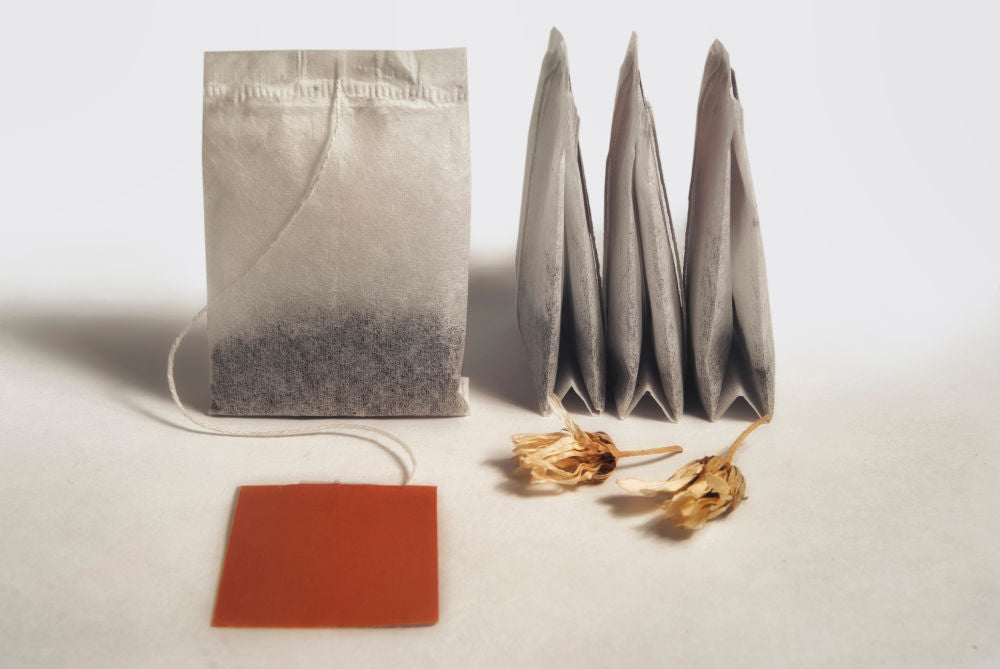
paper tea bag
The nylon tea bag
To circumvent the drawbacks of the aroma of the paper bag, a large number of producers and packers have turned to the nylon bag, diffusing the aromas of the infusion much more effectively thanks to better water circulation .
Warning, as mentioned above, these bags release a large quantity of plastic particles.
Our recommendation: Avoid .

Nylon tea bag
The muslin tea bag
Several types of muslin exist today, such as muslin bags made of cotton, nylon, or, more rarely, silk.
Muslin offers numerous advantages, such as good preservation and diffusion of aromas . Muslin bags are also more durable than paper bags.
However, we advise you to pay close attention to the type of muslin when making your purchases. Most are not compostable, so be sure to check the material of the muslin . If the material is not specified, it is most likely nylon.
Our recommendation: Check the material of the muslin .

muslin tea bags
The tea and mate bag is made of corn starch
These innovative sachets are 100% natural.
The product is made from plant-based materials and is much safer to use: no plastic, no staples or microparticles. Finally!
Resistant, durable and perfectly diffusing aromas , we therefore chose this solution for our production of mate in sachets .
Our recommendation: Highly recommended.

Mate tea bag made from corn starch
Loose leaf tea and maté infusion
A final, very relevant alternative to tea bags is, of course, loose leaf tea !
Whether in a tea ball, teapot, coffee maker or mate gourd, there are a multitude of infusion methods to fully enjoy a tea or mate.
We recommend our 80g format , ideal for discovering mate in a small format, and why not try several types of mate!


Latest articles

Alerte Pesticides : Quelles marques de maté éviter et comment bien choisir ?
Rappel maté Piporé : découvrez les risques des pesticides et comment choisir une Yerba Maté...
Read more
Mistakes to avoid when preparing your mate
Preparing a good mate requires a bit of technique. Here's how to avoid the most...
Read more
What is the composition of yerba mate? Caffeine, antioxidants, and vitamins
Mate is a natural infusion rich in mild caffeine, antioxidants, vitamins and minerals, providing stable...
Read more
Barbacuá mate: a dangerous traditional drying method?
The drying of the mate, why don't we offer smoked mate with barbecue?
Read more